
Designing a reply matching system that eliminates misrouted responses.
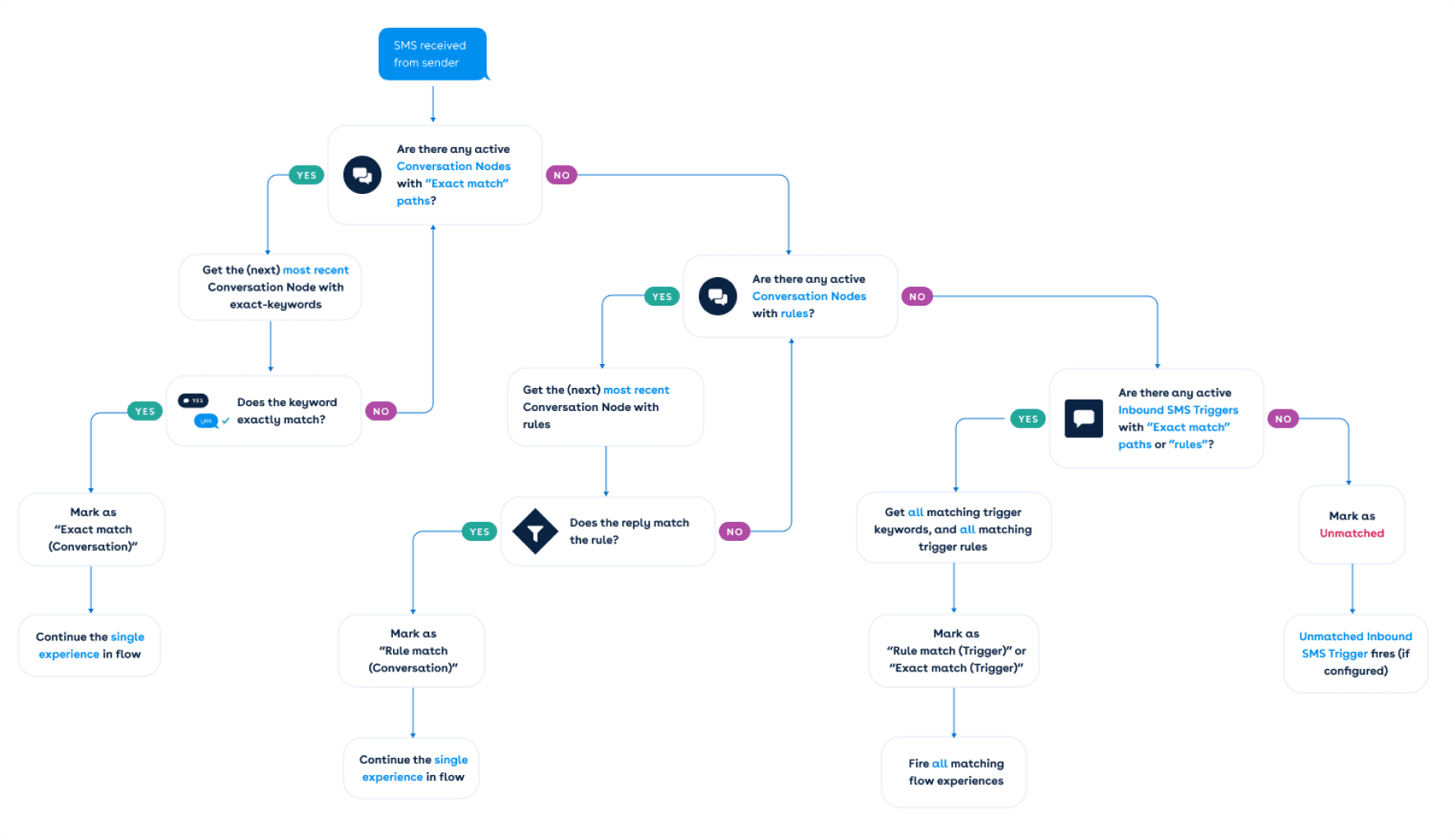
Pendula's conversation system was losing customer replies. The existing system could only match replies under extremely narrow conditions; anything outside those paramters were effectively lost. I designed a reply matching system that eliminated misrouted responses and seamlessly integrated with existing workflows.
Pendula is a B2B SaaS customer engagement platform. Non-technical marketers can build smart, personalised workflows with integrations—think complex cross-sells campaigns, or even a scheduled offer based on the recipient's eligibility.
The results
78% adoption rate
Exact-match replies are still needed to contractually binding offers
All replies were 100% tracked
With new use case unlocks (surveys, upsell/cross-sell)
Scalable architecture
System designed to grow with expanding capabilities
2% reduction in churn rates
For a leading telco customer
So how did we get there?
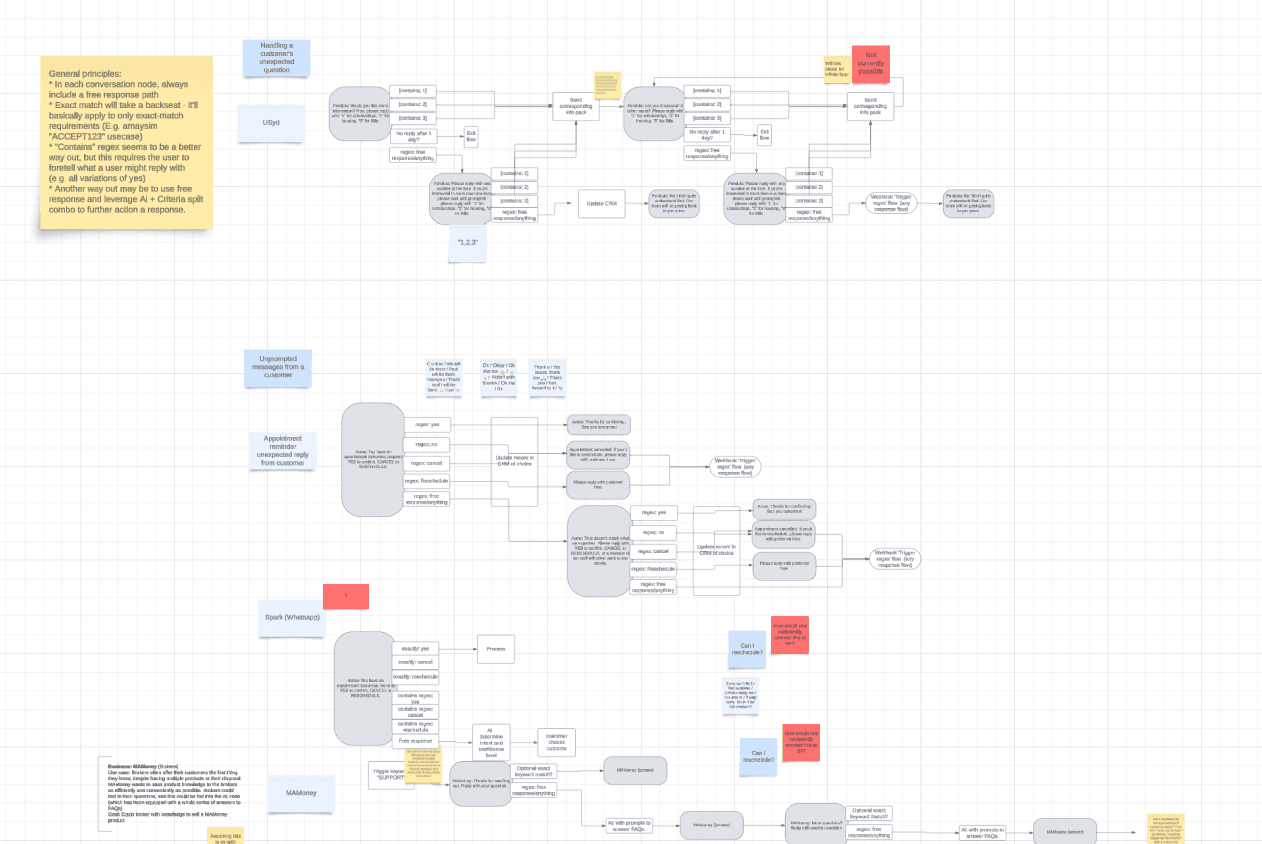
How do real life customers actually reply?
User interviews were held, with us trying to solve what scenarios were causing replies to go missing? What did users need to see, and when? Key patterns emerged:
30% of recipients reply outside of prescribed instructions
Customers reply with feedback or variations of the instructions ("For sure", "yep", "Y") that the exact-match system couldn't handleUsers need to definite intents to measure metrics and reply with confidence
Users manually addressed each unexpected reply ("Y" instead of "YES") that came in.Customers provide unsolicited, insightful feedback
Valuable NPS insights have been lost as it isn't captured in a system of record.
Running user interviews revealed 'I'm coming' can be expressed differently according to its context.
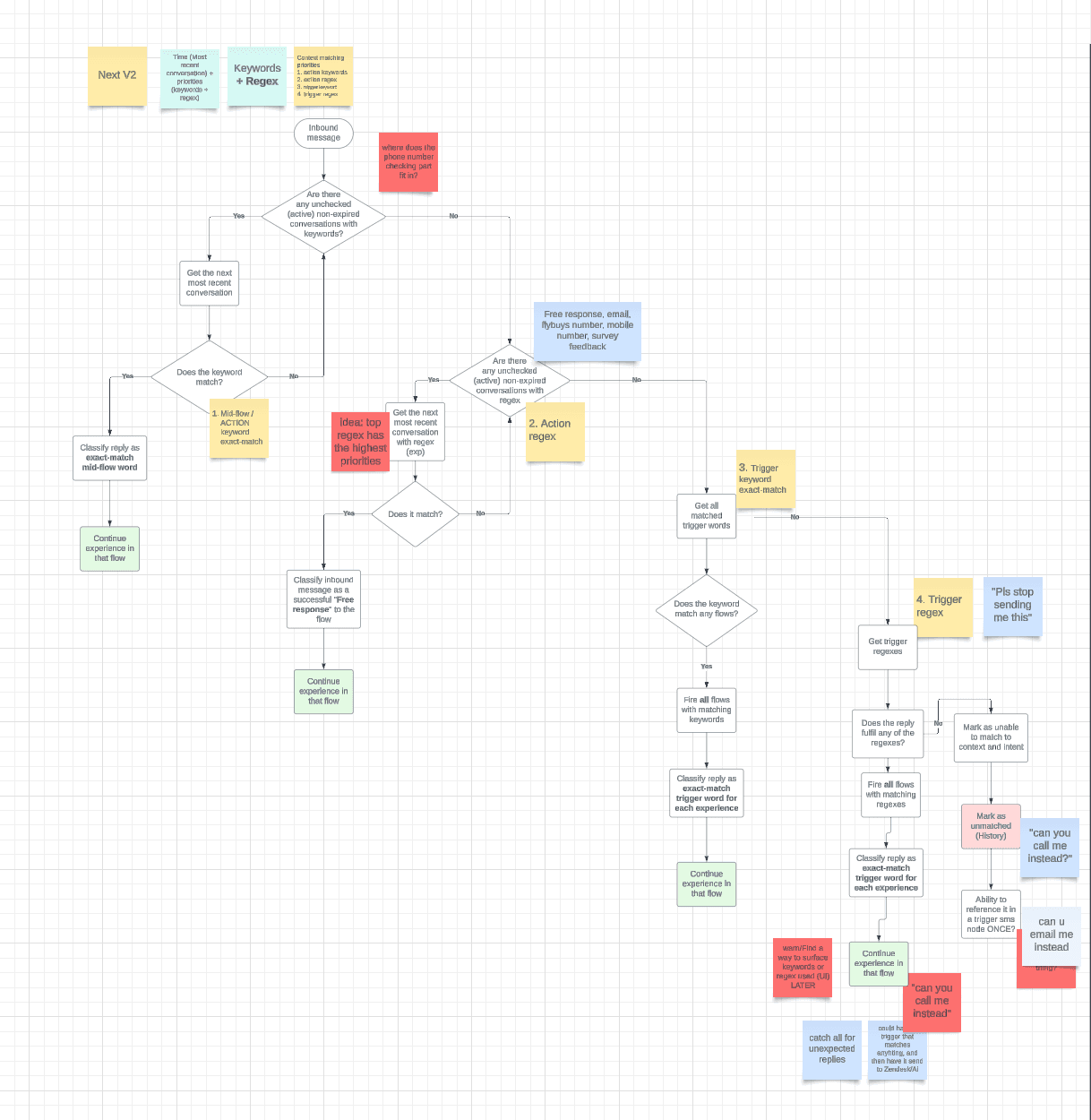
Iterating, and iterating again
Tasking a tester to filter information on a granular level. Information was revealed through progressive disclosure and visual cues. It worked a charm!
I worked closely with the engineering team and customer success to gather real-world use cases. The feedback shaped refinements to the interface—how we surfaced confidence levels, how users could override incorrect matches, and how the system handled edge cases.
Working closely with engineers during implementation ensured the experience felt seamless even as the underlying matching logic became more sophisticated.
Prototyping with real customers shaped the final design
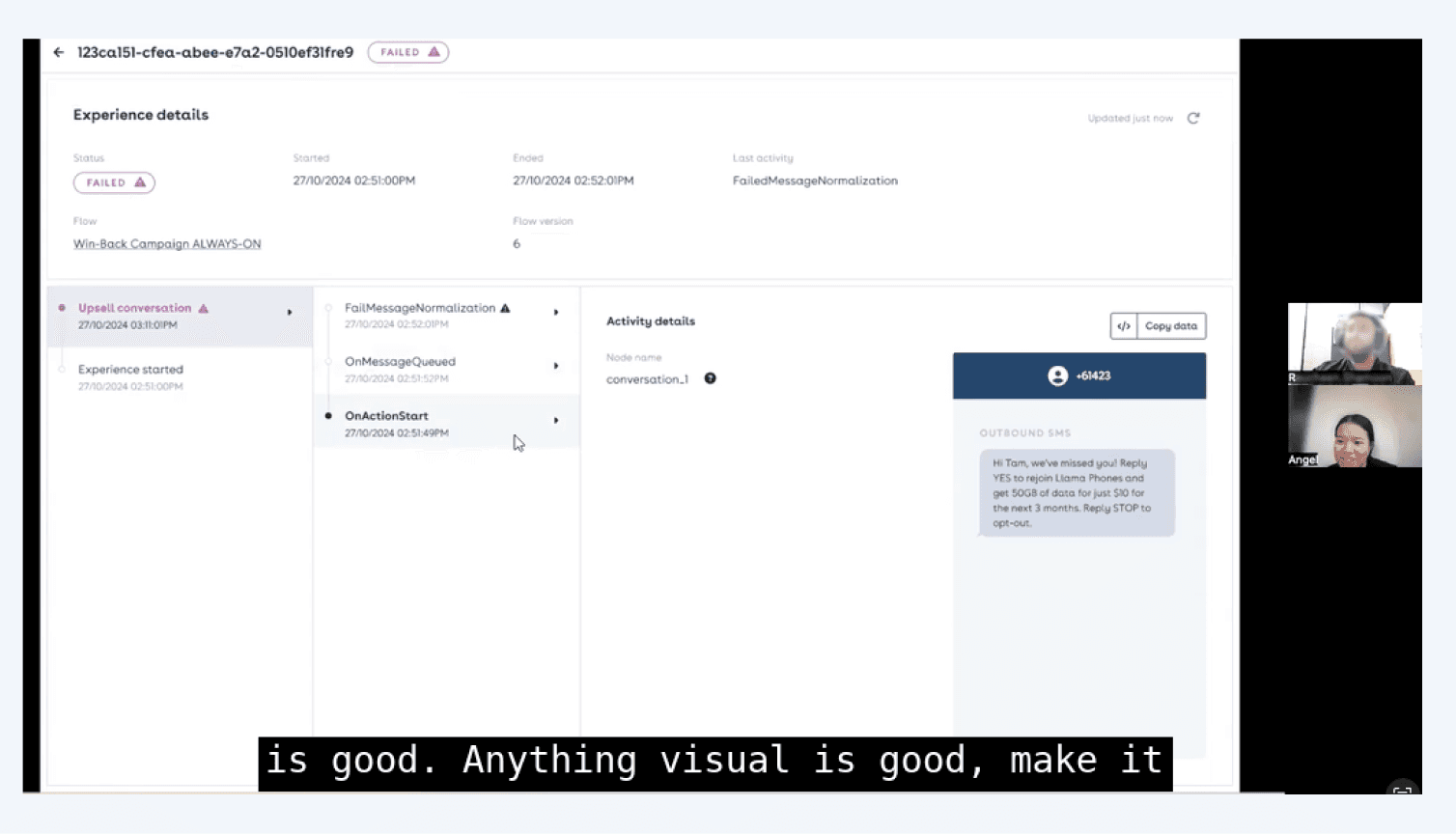
Tasking a tester to filter information on a granular level. Information was revealed through progressive disclosure and visual cues. It worked a charm!
Running high-fidelity prototype tests with customers helped shaped the MVP. From there, I worked with the Engineering team from scoping to feature release, ensuring the core problem is addressed whilst sensibly balanced technical limitations and potential tech debt.
The solution
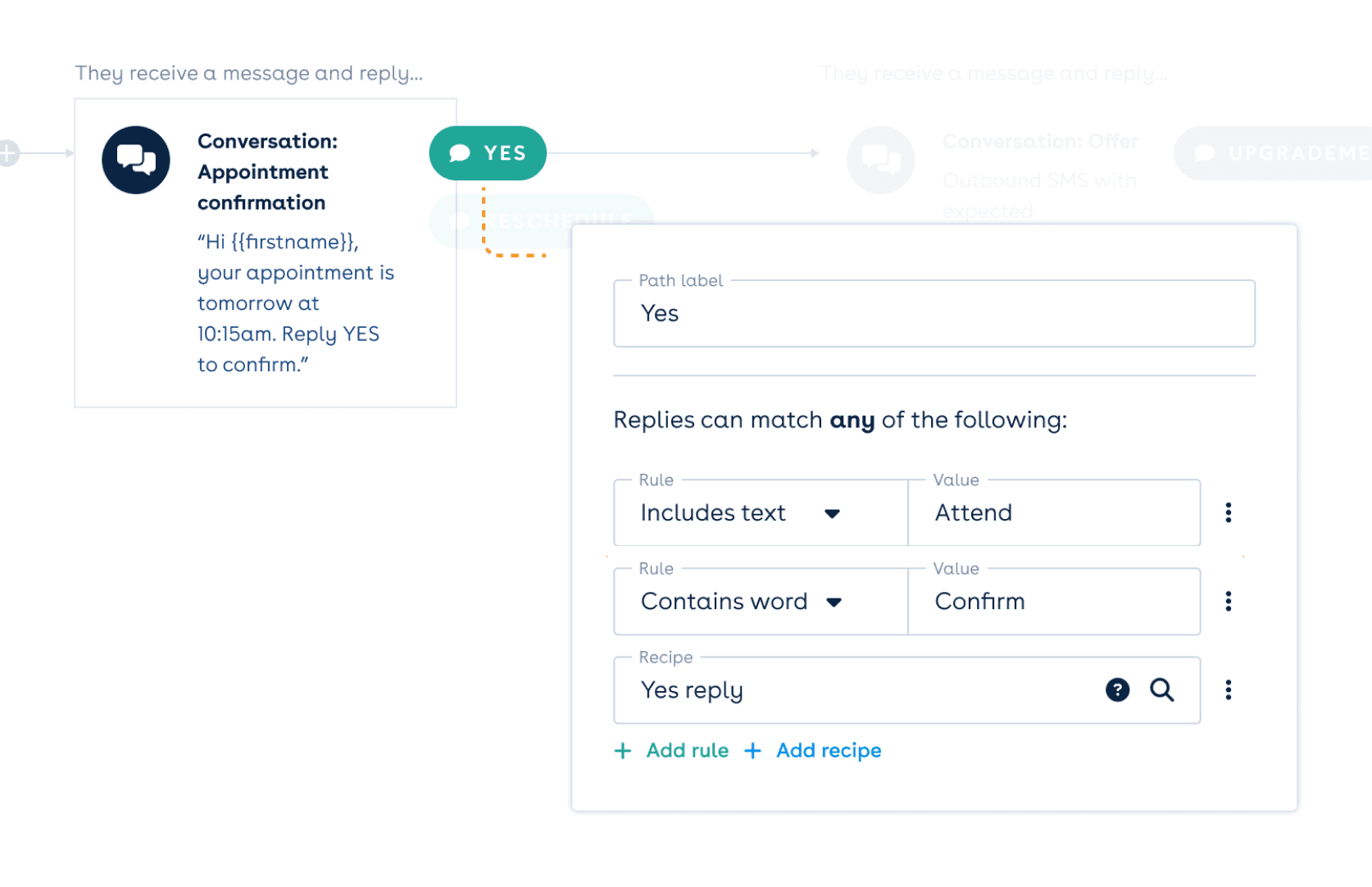
Recipes: pre-written rules
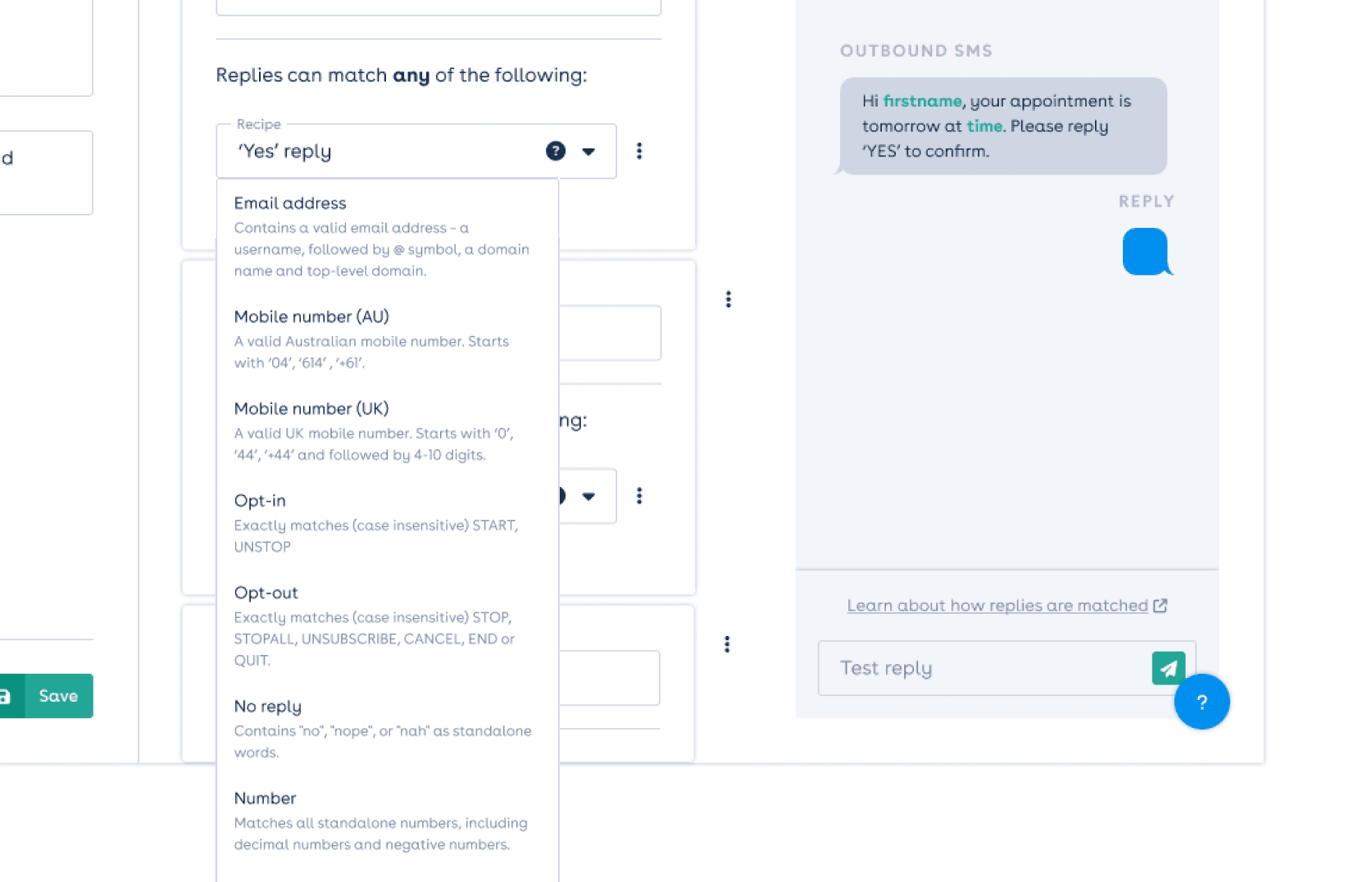
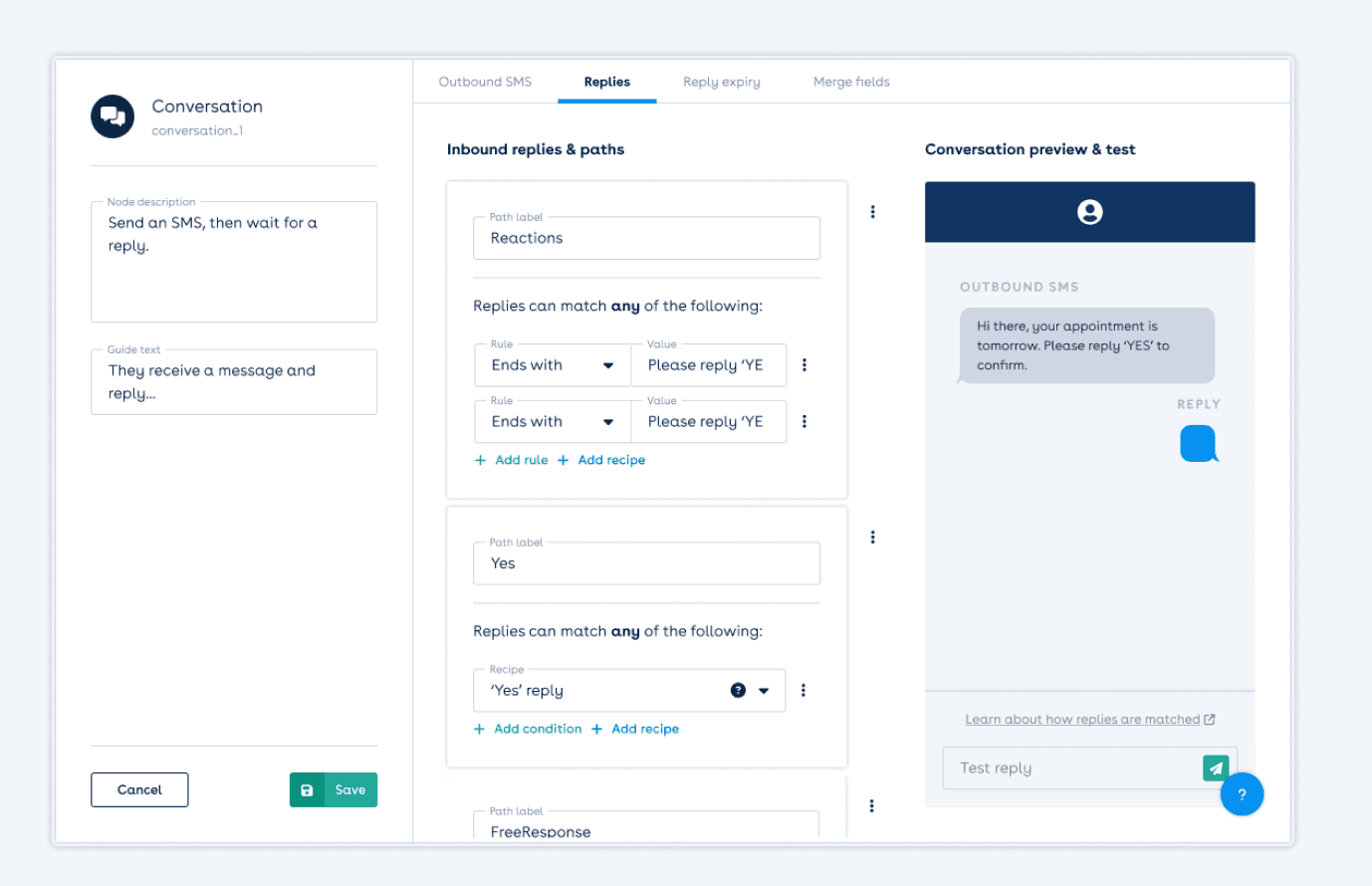
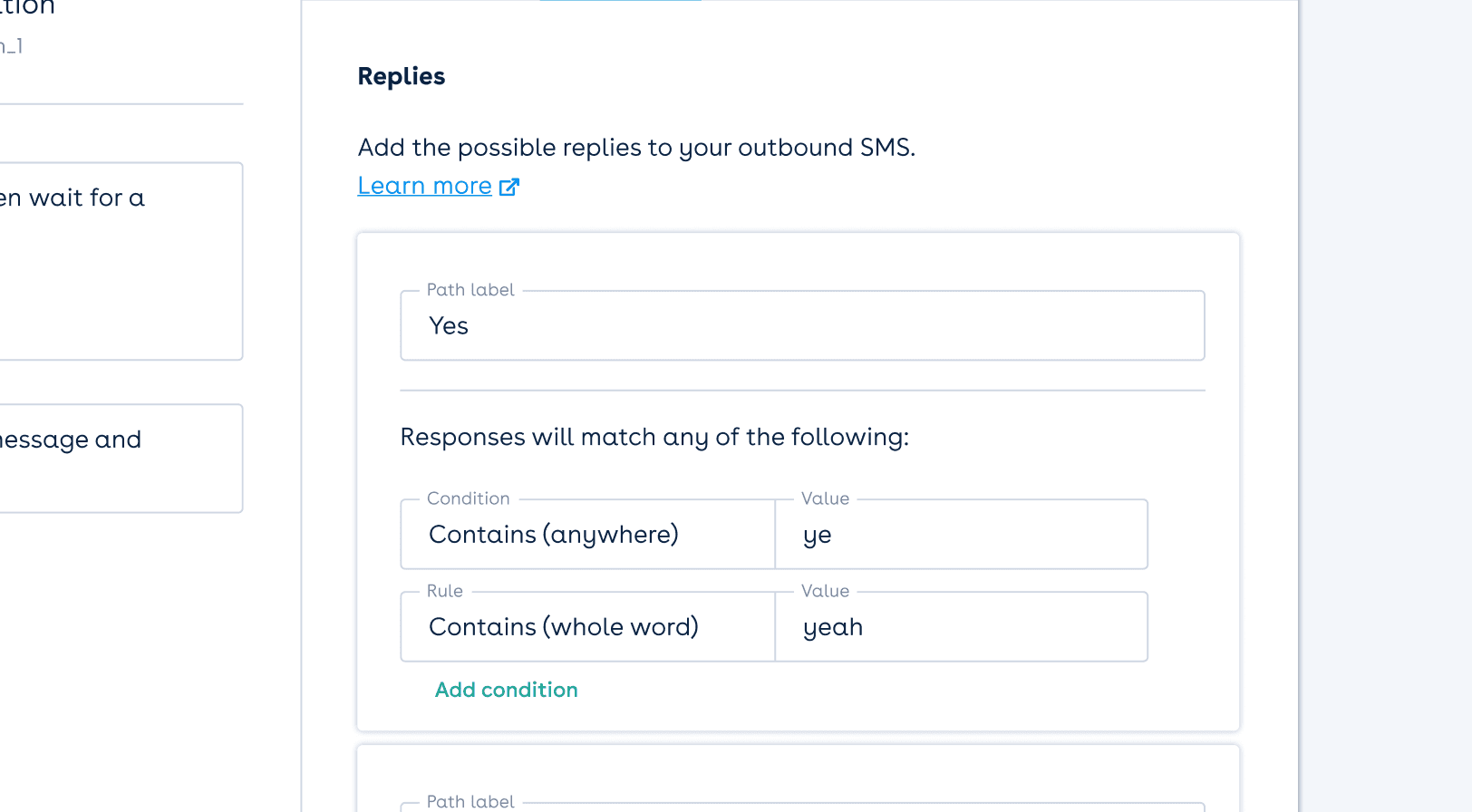
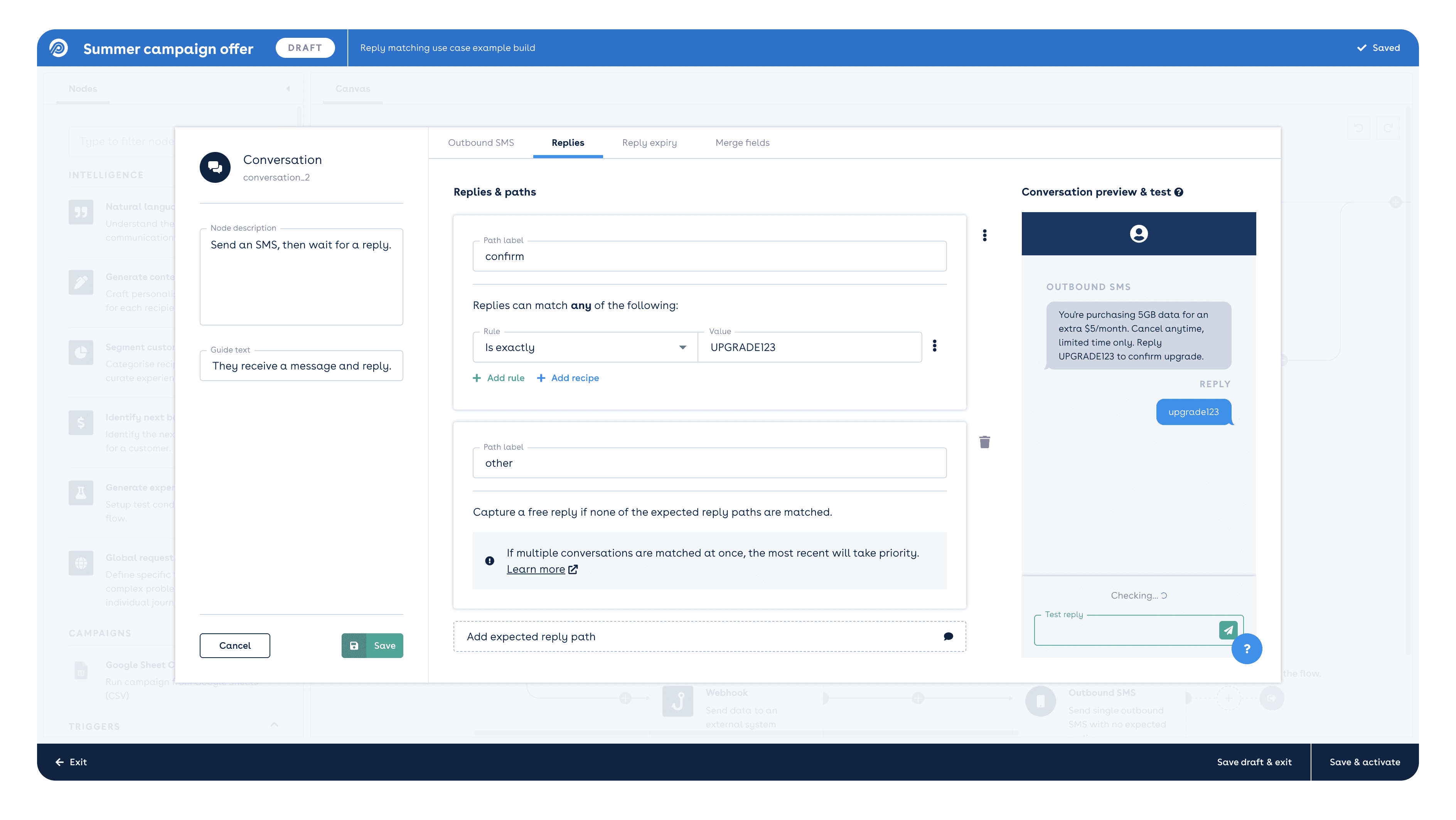
Easy reply criteria builder
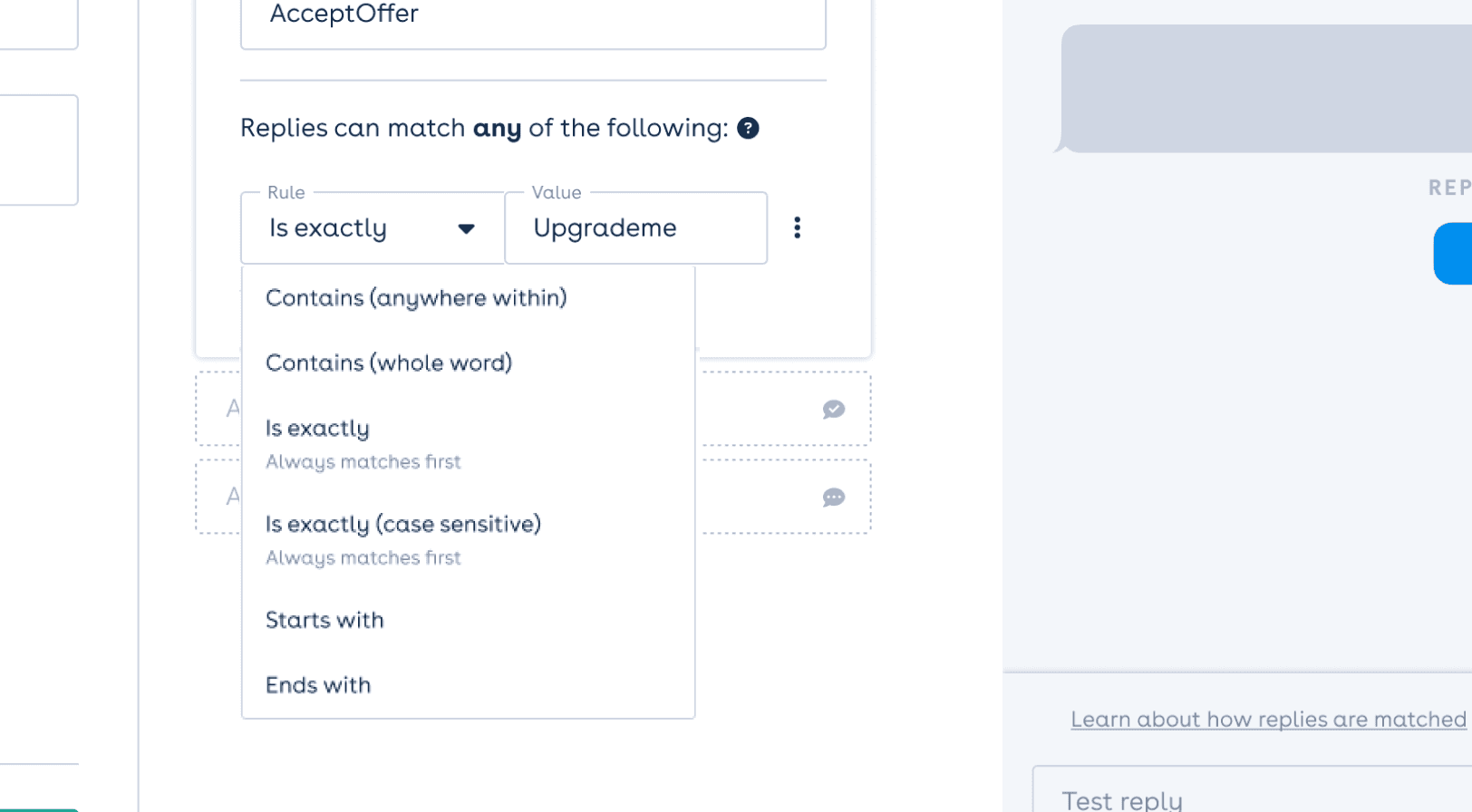
We devised a way for users to easily apply a rule – if it's matched, the recipient continues on the workflow path.
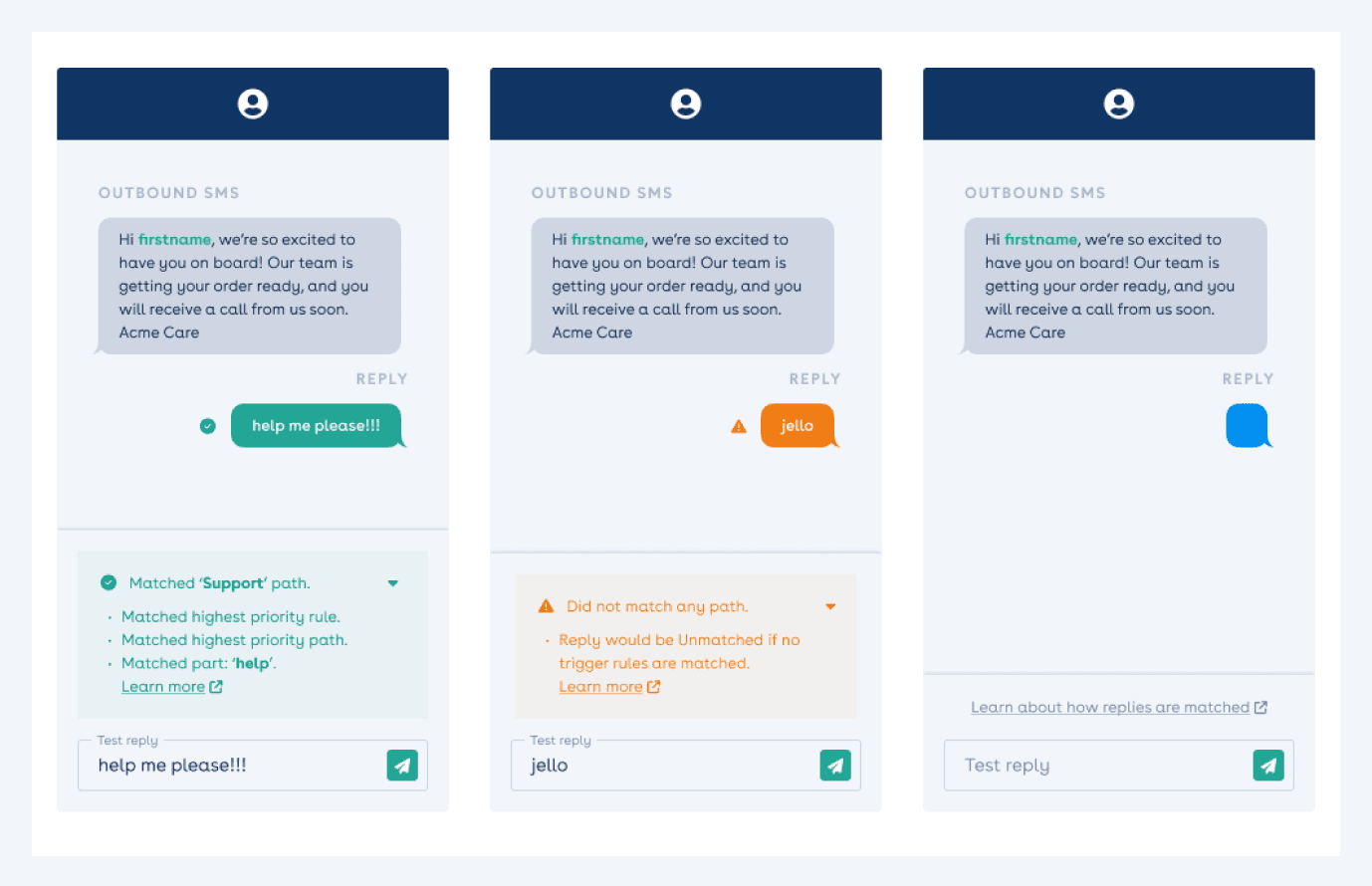
Conversation tester
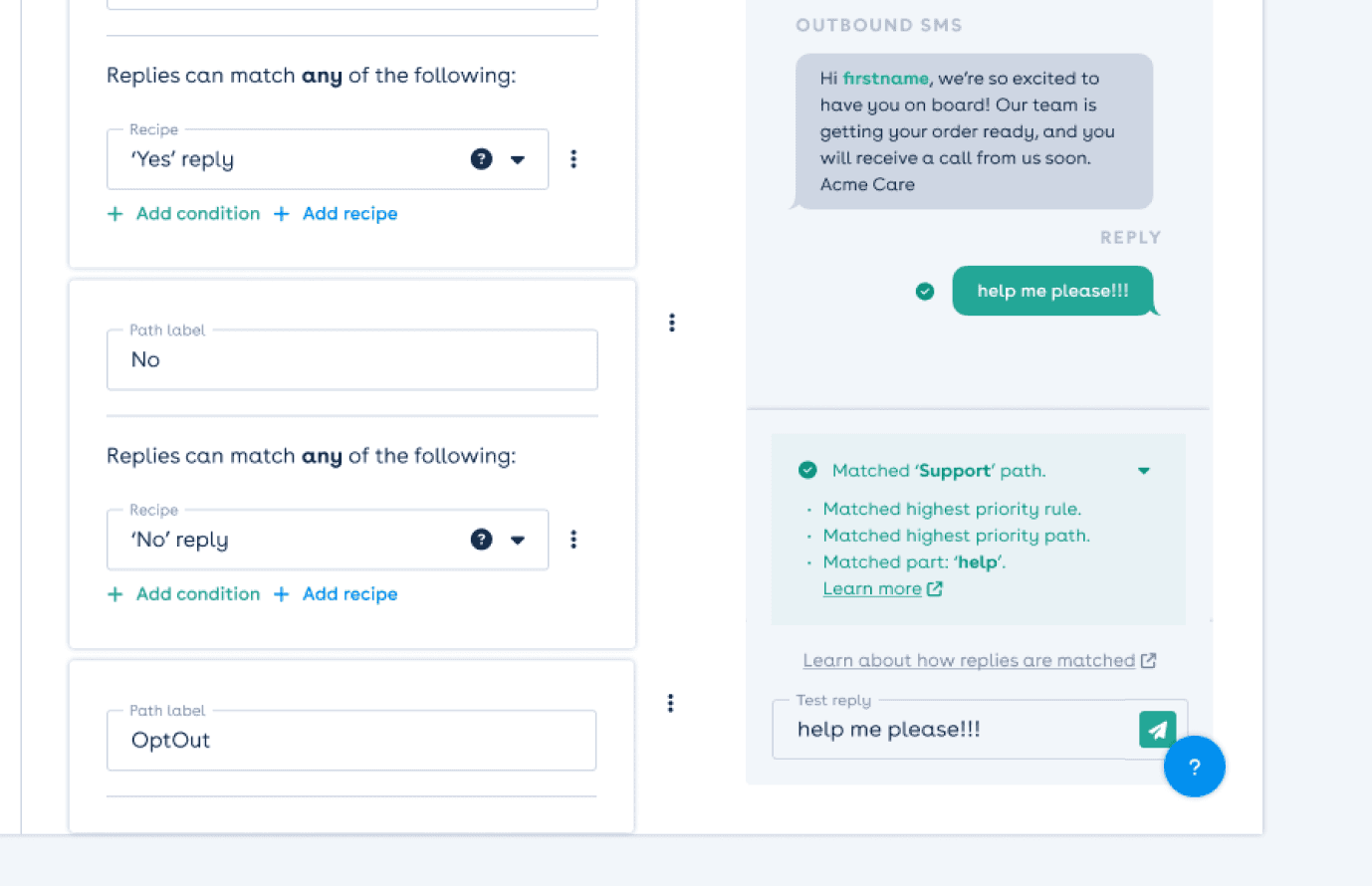
A way for users to test the rules they've set up to foolproof the customer journey.
A fallback option when all else fails
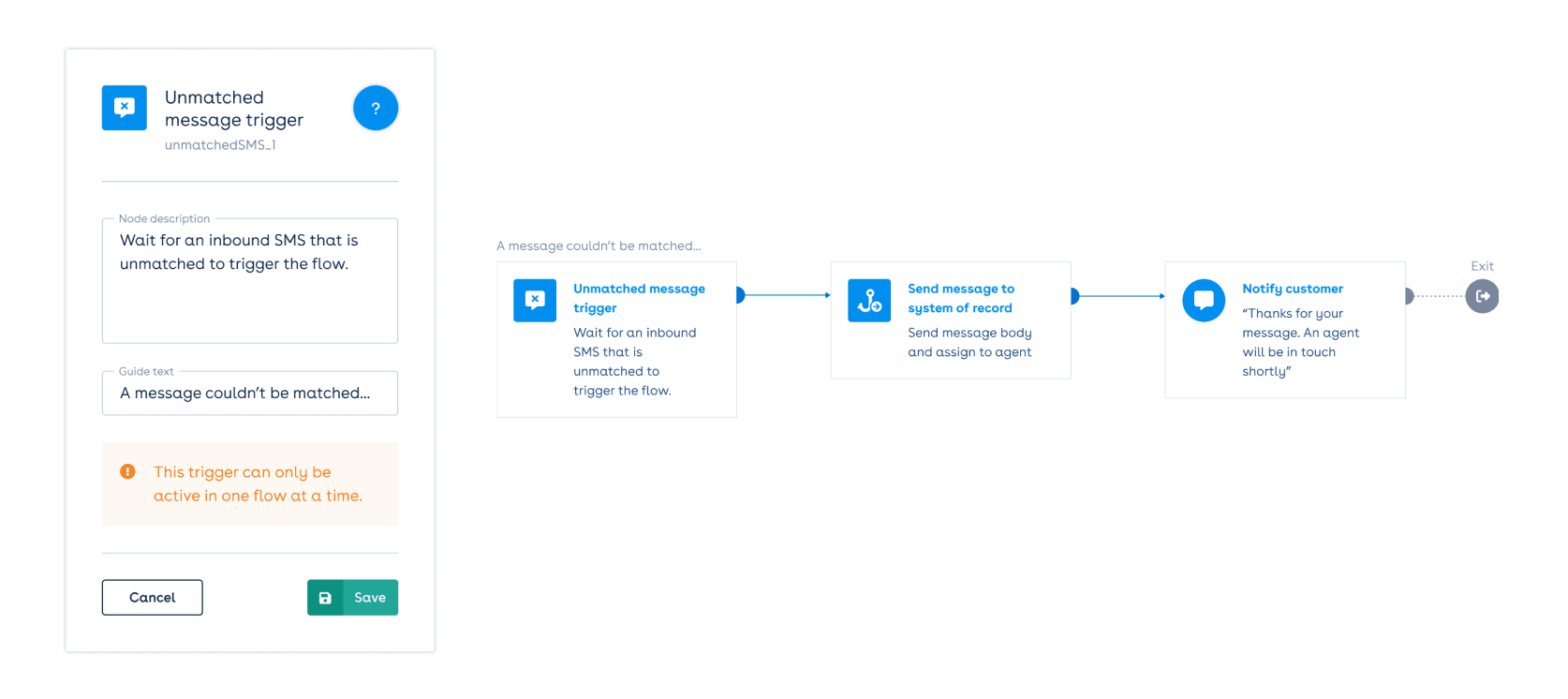
The node and an example flow where agent is notified of a unsolicited reply.
The launch
Product marketing collaterals created, and technical documentation written to support feature release with breaking changes to existing customers.
The results
78% adoption rate
Exact-match replies are still needed to contractually binding offers
All replies were 100% tracked
With new use case unlocks (surveys, upsell/cross-sell)
Scalable architecture
System designed to grow with expanding capabilities
2% reduction in churn rates
For a leading telco customer
My role
Team
Lead product designer (me!)
1 product manager (me!)
4 engineers
1 engineering manager
Tools
Figma, LucidChart,
Maze, Notion
skills
Product design
User research & testing
Product marketing
Design architecture